Most “retail trends” articles read like a list of buzzwords someone heard at a conference. This one doesn’t do that.
Below is a plain-English tour of what genuinely changed in retail over the last 18 months, what quietly died, and what it means if you’re building something in India. No jargon without an explanation. If a term trips you up, our big fat list of startup terms has you covered.
The 30-second version
- AI shopping assistants stopped being chatbots and became agents; they now do things, not just answer things.
- The biggest experiment in AI shopping – buying stuff inside ChatGPT- failed. The new model is: discover in AI, buy on your own site.
- Getting your products found by AI is now as important as getting found by Google (SEO)
- In India, quick commerce is the real story. It’s growing at roughly twice the pace of everything else in digital commerce.
- Physical stores are not dying. They came back as trust-builders.
- Blockchain, voice commerce (as of now), and VR shopping have quietly fallen off the list.
What actually changed
1. Chatbots grew up into agents
Old chatbot: “What’s your return policy?” → pastes a policy paragraph.
New agent: “I need a professional but breathable outfit for a three-day conference in Singapore, plus shoes I can walk 10,000 steps in” → it checks the weather there, cross-references your past purchases and sizes, checks what’s actually in stock, and puts together a full set.
That’s not a demo. Industry analysis of 2026 retail AI describes exactly this shift: the rigid, keyword-matching bots of the early 2020s have largely disappeared, replaced by systems that understand intent and context.
Why it matters for you: if you’re building a store, “add a chatbot” is no longer a differentiator. It’s the floor. The question is whether your agent can actually act – check inventory, fetch customer data from the CRM, apply a discount, initiate a return, or at least create a ticket without human intervention.
2. The great AI checkout experiment failed (this is the important one)
This is the story almost nobody wrote about properly, and it’s the most useful thing in this article.
In September 2025, OpenAI launched “Instant Checkout” — buy things directly inside ChatGPT, without leaving the chat. Etsy, Walmart, Target and Shopify all rushed in. It was supposed to be the future of shopping.
Six months later, it was dead. CNBC reported in March 2026 that OpenAI ended the feature and pivoted to helping retailers build their own apps inside ChatGPT instead. Users now discover products in the chat and then go to the retailer’s site to actually pay – that’s now the uptrend. Getting your products mentioned by ChatGPT is now a service offered.
Why did it fail? And these reasons are worth memorising:
- Almost nobody signed up. Of Shopify’s millions of merchants, only about 30 ever went live, according to Forrester’s Emily Pfeiffer.
- The product data was wrong. OpenAI was scraping retailer websites to get product info, which meant stock levels, shipping costs and prices were frequently inaccurate. Pfeiffer’s blunt assessment was that scraping simply can’t produce the depth of product data commerce needs.
- The maths didn’t work. Walmart put around 200,000 products into it and found that checking out inside ChatGPT converted roughly three times worse than sending people to walmart.com. Interestingly, ChatGPT drove about twice the rate of new customers — it was great at discovery, bad at closing.
- People didn’t want it. Per Forrester’s December 2025 consumer survey, only 35% of Gen Z and 23% of Gen X had even used ChatGPT to search for a product, let alone buy through it.
OpenAI’s own framing was that the best experiences come from deep merchant partnerships, and merchants should get options for how they convert customers. Translation: you keep your checkout, we’ll handle discovery.
The lesson learned: Discover in AI, buy on your own site. Build your product data to be machine-readable and accurate. Don’t hand over your checkout.
3. There’s now a plumbing layer under all of this
Before, if you wanted to sell through ChatGPT, you built one integration. Through Google, a different one. Through Copilot, a third. Painful.
So the industry built shared standards; think of them as USB ports for AI shopping. You need to know three acronyms:
| Standard | Who built it | What it does |
|---|---|---|
| ACP (Agentic Commerce Protocol) | OpenAI + Stripe | How an AI agent talks to your store |
| UCP (Universal Commerce Protocol) | Covers the whole journey — discovery, cart, checkout, post-purchase | |
| AP2 (Agent Payments Protocol) | Proves a human actually approved the purchase |
These are designed to stack on top of each other, not replace each other. AP2 answers the question every bank asks: did the customer really authorise this, or did a bot go rogue? Google handed AP2 over to the FIDO Alliance in April 2026, so no single company controls it.
There’s also MCP (Model Context Protocol), the underlying connection layer – Shopify now ships MCP endpoints on every store by default, which means millions of stores are already agent-readable whether their owners know it or not.
What to actually do: don’t build all three. Just make sure your product feed is clean, current, and structured. That’s the input every one of these standards needs.
4. Getting found by AI is the new SEO (important)
People are increasingly asking an AI what to buy instead of typing into Google. Snowflake’s 2026 retail outlook notes consumers turning to LLMs over search engines for shopping.
This has a name: AEO or GEO (answer/generative engine optimisation), but the practical version is boring and unglamorous like how SEO always was:
- Your product titles, descriptions, prices and stock status must be accurate and structured.
- Reviews and third-party mentions matter more, because that’s what the model reads.
- If your product data is a mess, you’re invisible in the comparison the AI shows the customer.
The Instant Checkout post-mortem proved this. The brands that lost weren’t the ones with bad products; they were the ones with bad data.
5. Quick commerce ate India
If you’re building in India, this is your headline trend, not agentic AI.
The numbers, from an Equirus report covered in July 2026: India’s digital commerce market sits at roughly ₹8 lakh crore in 2026, with quick commerce at ₹1.08 lakh crore, growing 40% year on year, more than double the pace of digital commerce overall.
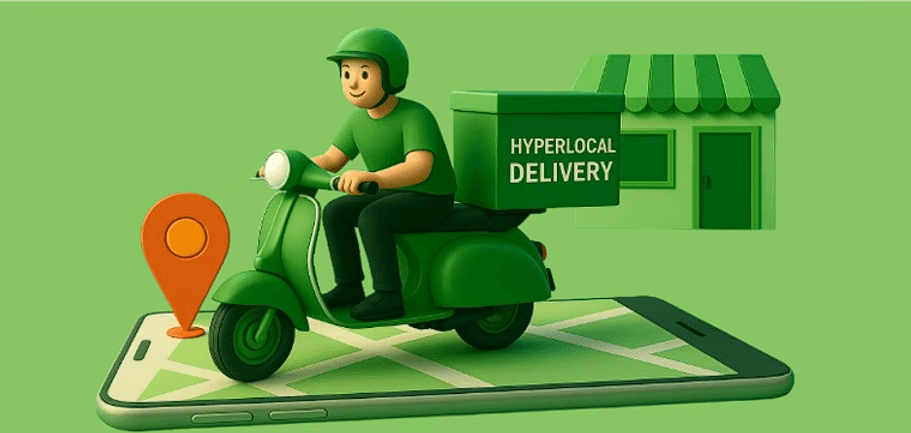
The market share picture, per Bernstein data: Blinkit leads at 46%, Swiggy Instamart at 24%, Zepto at 22%, running on more than 6,000 dark stores nationally.
Dark store, explained: a small warehouse in your neighbourhood that looks like a shop but has no customers inside. It exists purely so a rider can grab your order in 90 seconds. It’s why 10-minute delivery is physically possible.
And it’s no longer just groceries – electronics, beauty, fashion accessories, pet supplies, and premium D2C brands are all being sold in 10 minutes now.
Where AI fits: demand forecasting per dark store, routing, dynamic staffing. Getting stock allocation wrong across 6,000 micro-warehouses is a mathematically impossible problem for humans.
6. ONDC is the cheaper rail nobody talks about enough
ONDC is a government-backed open network that lets small sellers plug into digital commerce without paying a marketplace a huge cut.
It’s now live in over 400 cities with more than 3 lakh sellers, offering commissions in the region of 3% – dramatically below what quick-commerce platforms and marketplaces take. ONDC also partnered with India Post in February 2026 for warehousing and logistics, which quietly solves a real tier-2/tier-3 problem.
For a young D2C brand watching its margins get eaten by platform take rates, this is worth a serious look.
7. Physical stores came back
Counterintuitive, but well documented. Capgemini’s read of NRF 2026 listed three headline trends: practical AI agents in operations, connected platforms enabling agentic commerce, and lastly the return of physical stores as trust-building hubs.
The logic is simple. The more shopping gets mediated by algorithms, the more people want to touch the thing before buying it. Stores offer sensory experience and human expertise that AI can’t replicate.
8. AI in the boring back office (where the money actually is)
Nobody writes headlines about this, but it’s where returns show up:
- Inventory: forecasting demand, cutting overstock and dead capital.
- Pricing: adjusting to demand and competition in near-real-time.
- Fraud: spotting unusual patterns before a chargeback lands.
- Marketing ops: generating and testing creative at a scale humans can’t match.
Gartner puts global retail technology spending at $388 billion by 2026, with AI-related investment growing at nearly 25% a year. Most of that isn’t customer-facing.
What quietly died
If you read a trends article that still leads with these, close the tab.
Blockchain for retail traceability. This was a 2018–2021 story. It never found a commercial reason to exist outside a handful of luxury and pharma pilots.
Voice commerce. “Alexa, order me detergent” was supposed to be a channel. It didn’t happen. Voice got absorbed into general multimodal assistants instead of becoming its own shopping surface.
Contactless payments as a “trend.” In India, this is infrastructure, not innovation. UPI processed 22.35 billion transactions in April 2026 alone. Nobody is impressed that you accept UPI.
VR shopping. AR virtual try-on is real and modestly useful for eyewear, makeup,p and furniture. The headset-based virtual store never arrived.
If you’re a founder in India, here’s your actual checklist

1. Fix your product data before anything else. It’s the single highest-leverage thing you can do. It determines whether you show up in AI-driven discovery, and it’s what killed most Instant Checkout merchants.
2. Own your checkout. Let AI drive discovery. Convert on your own surface, where you control the experience and the data.
3. Decide your channel mix deliberately. Your own site, marketplaces, quick commerce and ONDC all have wildly different take rates. Model the unit economics per channel before you chase GMV. A brand can grow 200% and die.
4. Take DPDP seriously now. If you hold customer names, addresses, e-mails, or order history, you’re covered by India’s Digital Personal Data Protection Act. Consent handling needs to be built in, not bolted on later — retrofitting it is expensive and awkward.
5. Know the regulatory weather. There’s a live policy debate about quick commerce displacing kirana stores, with real questions being raised about predatory pricing, market concentration, and gig worker protections. If your business model depends on today’s rules, understand who’s trying to change them.
6. Get around people who’ve solved this already. Almost every problem above – channel economics, data infrastructure, compliance— has been solved by a founder two years ahead of you. The fastest way to skip 18 months of expensive mistakes is proximity to them. That’s the whole thesis behind the founder community we’ve built in Goa.
FAQs
Can I actually sell through ChatGPT in 2026?
You can be discovered there, yes. Buying inside the chat is largely gone — OpenAI shut down Instant Checkout in March 2026 and moved to a model where shoppers find products in ChatGPT and complete the purchase on the retailer’s own site or app. Optimise for discovery, keep your checkout.
What’s the difference between quick commerce and e-commerce?
E-commerce ships from a large central warehouse in 1–3 days. Quick commerce ships from a small local dark store in 10–30 minutes. Different inventory strategy, different economics, different customer expectations.
Do small brands need to implement ACP, UCP, DP, or AP2?
Not directly. Focus on clean, structured, accurate product data. If you’re on Shopify, a lot of the agent-facing plumbing is already handled for you.
Is ONDC worth it for a small D2C brand?
Often yes, especially if platform commissions are hurting you. It’s live in 400+ cities with 3 lakh+ sellers and commissions around 3%. The tradeoff is that you own more of the demand generation.
What’s the biggest AI mistake retailers make?
Buying a flashy customer-facing tool while their underlying data is a mess. AI applied to bad data produces confident, fast wrong answers.
Where to go from here
The pattern across all of this is the same: the winners aren’t the ones with the newest AI tool. They’re the ones whose data, unit economics, cs and channel strategy were already in order, so that when a new surface appeared, they could plug in within weeks instead of quarters.
If you’re building in retail, D2C, or commerce infrastructure in India and want that kind of clarity faster, that’s exactly what an accelerator is for. We’ve put together an honest breakdown of the best startup accelerators in India, including where build3 fits and where it doesn’t.
Building something in this space? Apply to the next build3 cohort →
Originally drafted by: Anika Bajaj