
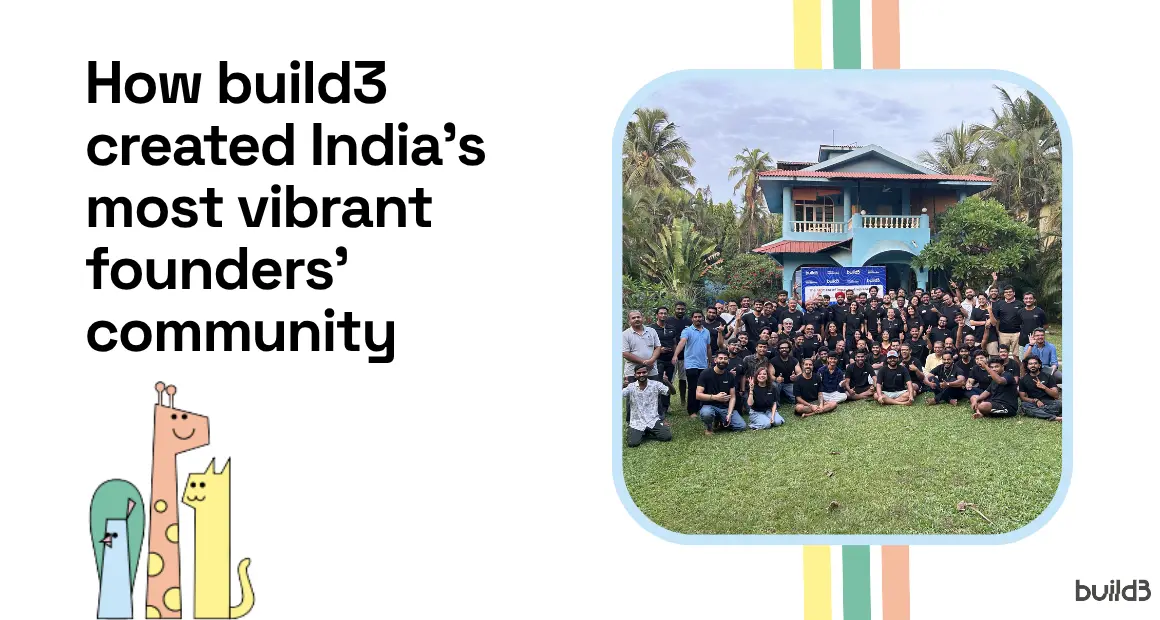
Being a founder is not like most other jobs because there is no roadmap or framework that can provide any real sense of certainty about where you are heading. Since it is a path that very few people choose, founders often find themselves navigating it in isolation or under stress.
This is why founder communities matter. Building a startup can often feel uncertain and lonely, and being surrounded by people who understand those challenges can make a huge difference. The right community provides support, practical insights, and a sense of belonging that helps founders navigate difficult moments with greater confidence.
One thing that matters even more is what founder community are you part of? There are a bunch of communities that exist on Instagram, Telegram, and many other websites. The question is, do the founders running this community have enough knowledge, experience, and skill set that can add benefit to your startup? Are other members equally engaging, active, and supportive? This is where it makes the difference.
What Boulder Taught the World About Startup Communities
Most founders are part of many communities that hardly give any return in exchange (which could be in the form of long-term relationships, finding a good partner/co-founder, getting good mentorship, and a community that supports you while you launch something), and many may expect that such communities may only exist in startup hub spots like San Francisco, Bangalore, Mumbai, etc. However, a town in Colorado called Boulder proved this wrong.
It’s a relatively small town, and despite its distance from the obvious centers of capital, it managed to produce one of the most resilient startup communities in the world. In his book Startup Communities, Brad Feld argues that this did not happen by accident, and it could not be explained away by luck or by the presence of a single large company, because the strength of Boulder rested in its core principles, which he named the Boulder Thesis.
The first principle is that entrepreneurs themselves must lead the founder community, rather than the government, the universities, or the investors. Feld draws a careful distinction here between what he calls leaders and feeders, where the leaders are the founders who are actually building companies, and the feeders are everyone else who supports them, including mentors, service providers, large corporations, and institutions. Both groups matter; however, the community only holds together when founders are unmistakably in charge of its direction.
The second principle is that these leaders must commit to the long term, which Feld frames provocatively as a horizon of at least twenty years, precisely because a founder community built for a single funding cycle will dissolve the moment that cycle ends.
The third principle is that founders’ community should not have multiple filters to reduce the number of applicants or participants; to be specific, many communities only allow members from prestigious backgrounds or specific universities. Boulder calls this slow poison and thus wants communities to promote inclusivity.
The fourth principle is that there must be continual engagement activities because that is how meaningful relationships are formed among founders, rather than through a single event held once a year. It is the ordinary, repeated interactions where founders, operators, and investors actually work alongside one another that build lasting connections.
Why Most Startup Founder Communities Fall Apart
Once you understand what Boulder did right, the reasons that other startup communities fail become almost predictable. Purpose and intention of long-term commitment are very important in setting the foundation for any founder community. Most of the startup communities are created with an intention of “networking,” and thus founders merely join, scout if they have anyone they can reach out to, and then they don’t come back. Which is the reason why Boulder says that building communities is like architecting it from scratch and takes time to create long-term relationships, a supportive environment, and a collaborative phenomenon wherein everyone is aligned to the leaders’ (founders’) purpose of community and aims to fulfill the same by providing support.
How build3 Built a Founders Community in Goa (India) in a Short Time
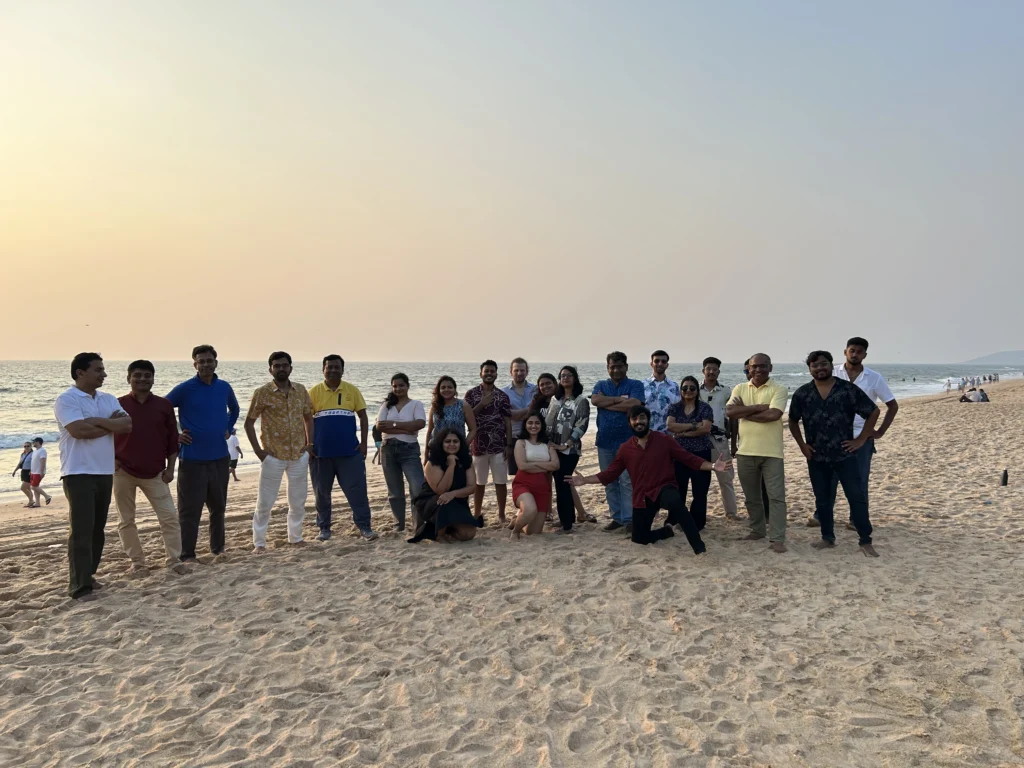
It was with these principles firmly in mind that we set out to build something at build3, and the reason we have managed to create a genuine founders community in a comparatively short time is not that we discovered a shortcut, but that we chose to integrate the same values that allowed Boulder to last.
Our founder, Varun Chawla, is a strong believer in Feld’s theory and is committed to positively impacting 100,000+ founders. His approach is rooted in inclusiveness and a willingness to support founders whenever needed. Having been a serial entrepreneur and investor himself, he has experienced both sides of the startup journey, giving him the perspective to lead and help founders navigate new directions.
As an impact accelerator and startup studio, we made a deliberate decision from the beginning that founders would lead, which is why the entire ethos of build3 has always been founders for founders rather than institutions for founders.
Because we treat build3 as an early-stage startup accelerator that is first and foremost a community rather than a programme with an expiry date, the founders who come to us in Goa tend to leave with more than a slightly larger network. Many founders who have attended our cohorts always visit build3 to meet us and share progress on how their startup is doing.
Many of our alumni founders do spare time, assist other new startups and guide them in the right direction, and we believe at our core that the success and intention we had set while creating build3. A community that people return to voluntarily, years after they have any transactional need for it, is the only real proof that the thing you built was a founder community at all.
From the City to the Soil: The Startup Ecoāshrām
After successfully hosting build3 in Goa and watching this founder community take root, we found ourselves asking a further question, which was whether the same philosophy that helps founders grow alongside one another might grow even stronger when it is connected to nature rather than to the constant noise of the city. That question led us to extend the idea into something we are calling the startup ecoāshrām, a space in the north of Goa set against the Western Ghats, where founders and investors can live, work, and reflect in surroundings.
The intention behind the startup ecoāshrām is not to offer another workation or a scenic startup retreat for its own sake, although the co-living setting and the landscape certainly invite that comparison, but rather to create conditions in which founders can step far enough away from the busy and gain a newer perception of what they are building/how they are operating. By bringing founders and investors together in this environment, we hope to deepen exactly the kind of long-term, founder-led, genuinely inclusive community that endures, while connecting it to a way of living that gives people room to find newer perspectives and a steadier sense of purpose.
If Boulder proved that a small place can build one of the most resilient startup communities in the world by getting a few principles right and staying committed to them, then our hope at build3 is to carry that same conviction forward in India, first in Goa and now in the hills.
Join our Community
If you are a founder interested in joining our community, we would be delighted to connect with you. We look forward to welcoming our first cohort of founders at Startup Ecoāshrām from the end of August 2026.
Whether you are just beginning your journey or already building something meaningful, we hope to meet you and grow together. You can join us or get in touch by following the link below.
1 Comment
[…] We’re a certified B Corp, so “impact” isn’t a label we bolt on at the end. If you’re building something meant to leave people and the planet better than it found them, come see what our founder community in Goa looks like. […]