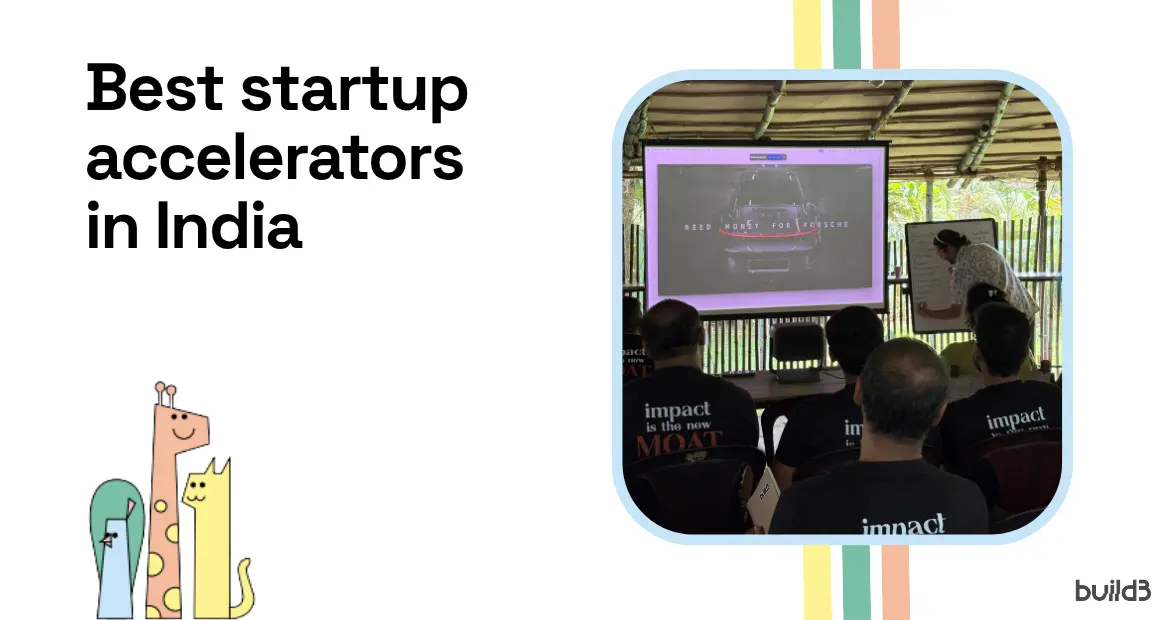
At its core, the purpose of accelerators in India is to fill the gaps that almost every early-stage founder carries while building. Most founders begin with conviction, an idea, and plenty of optimism, but in most cases they lack the experience, the domain expertise, and the systems that turn a promising idea into a company that survives. An accelerator’s job is to close that gap through mentorship by providing a proven playbook and a compressed few months of learning that would otherwise have taken years to accumulate alone.
Apart from this, the investor community in India is very scarce and has lately reduced the funds that go to startups in comparison with the number of startups we have. Moreover, investors are always in application surplus, as they receive applications from all around the country, and it becomes impossible for them to review each startup in detail and approach them.
This is the real bottleneck most founders face, because with limited capital, they do manage to build the product, but to scale, investors are required, and this is when the real problem arises: what do we do next since we have no funds?
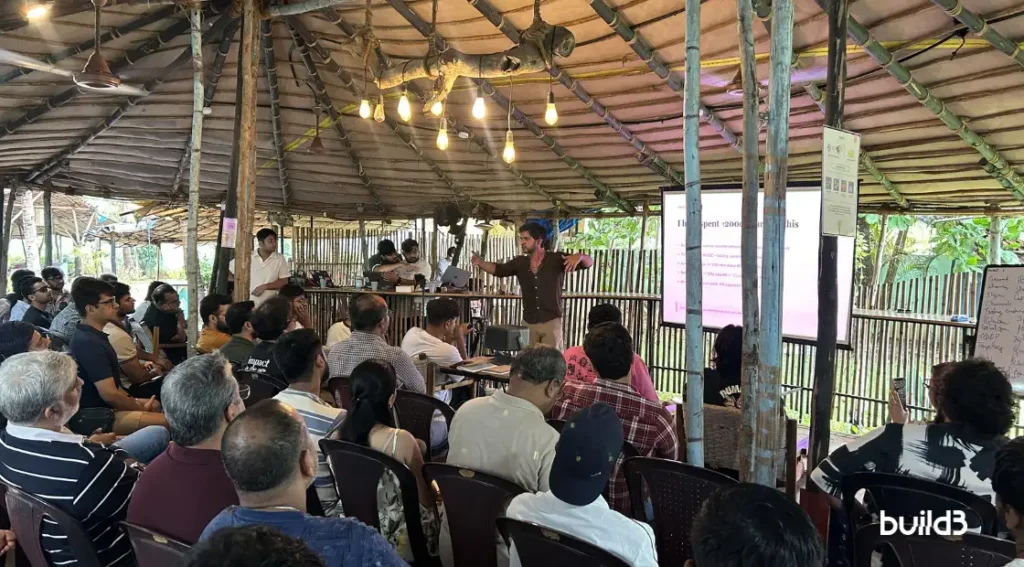
This is where an accelerator steps in, since most accelerators either invest some capital themselves or help founders connect with the right investors. A good accelerator places you in front of that circle, so the chance to pitch to a room of investors, operators, and fellow founders is not a nice extra; it is often the whole point, since one honest introduction inside a closed network can move a company further than months of cold outreach ever will.
Below is a list of some of the best startup accelerators in India, and this list does not focus on capital deployed but rather on accelerators that carry the intention of inclusivity and add a layer of impact to the startups they take in. Inclusivity here does not mean every program accepts everyone, because each of these programs opens a different kind of door, whether that is taking no equity, welcoming outsiders, or meeting founders at the idea stage. The intention of this list is to ensure that any founder looking to raise funds has a genuinely good chance of being selected and getting closer to fundraising.
1. Google for Startups Accelerator India
Google’s accelerator takes the top spot on this list for a reason that has nothing to do with prestige and everything to do with what it costs a founder, which is nothing at all in terms of ownership. The program is entirely equity-free, so a founder gets access to serious technical support at exactly the stage when giving away a slice of the company is most expensive, and very few programs of this calibre anywhere in the country can say the same. That is the specific kind of openness it brings to this list, since the biggest barrier it removes is the one founders fear most, which is losing ownership before the company has even found its feet.
It runs for three months in a hybrid format, taking small cohorts of roughly ten to fifteen startups at a time, which keeps the room intimate enough that founders actually get attention rather than being processed through a crowd. The focus is narrow and worth being upfront about, since the program is currently built for AI-first startups that are between seed and Series A, are headquartered in India, and are building genuinely technical products such as core AI applications, agentic systems or foundational models.
If your company is early but not yet showing traction, or if AI is not central to what you are building, this is probably not the right fit for you, and it is better to know that before spending a week on the application. For the founders, it does fit; however, the value sits in the access rather than in any cheque, because you are paired with engineers and experts from Google who work on the specific technical problems holding your product back, alongside deep dives on product design, customer acquisition, and leadership.
There are also practical perks that matter more than they sound, including cloud credits and early access to Google’s newer AI tools, which can quietly save an early team a meaningful amount of money and time. Cohorts open periodically rather than continuously, so founders who fit the profile are best served by registering interest early and watching for the next intake.
2. build3 – startup studio
If Google removes the ownership barrier, build3 removes the one that comes even before it, which is the barrier of getting in at all. Where many prestigious programs run on invitation, quiet referral or a filter so narrow that most founders never realistically get through, build3 runs an intake that founders can actually apply to and be accepted into, and it deliberately meets founders at the earliest and most uncertain stage, which is exactly where support is hardest to find. On a list built around inclusivity, that combination of an open application and an early-stage focus is the clearest expression of it.
Further, unlike many accelerators, build3 is different because its philosophy differs from the hustling mindset we usually come across. build3 wants founders to build with purpose and without taking on too much stress, and it creates breathing space for founders to shine. To extend the same philosophy, build3 has even built an entire startup eco-āshrām in Sindhudurg, Maharashtra, where founders can stay and co-build with each other, closer to nature.
The founders who benefit most from a model like this are often the ones more exclusive programs overlook, whether because their idea is early, their background is unconventional, or their network does not yet include the people who write cheques. Build3 does not write the largest cheque in the country, and plenty of programs raise and deploy more, yet on the specific question of whether a real early founder can get in and get meaningfully helped, it stands out.
3. T-Hub, Hyderabad
The archetype of T-Hub falls closer to that of Y Combinator in the sense that T-Hub invests in deep tech and prototypes and has a good amount of funding capability owing to its larger investor reach, while its access to the Startup India Seed Fund adds a further benefit. It also runs a program called T-Bridge that facilitates international expansion into markets such as the US, UK, Japan and Singapore, and it holds corporate partnerships with industry giants like Google, Microsoft and Amazon.
Apart from this, founders also like its methodology, wherein it accepts no equity in the startups it supports, it accepts founders from anywhere in India, and it helps them move from early prototypes through to scaling, which means a founder can find a track that fits where they actually are rather than being forced to pretend they are further along. That last part is the openness that earns it a place here, since a founder does not need to arrive polished, connected or based in a particular city to be taken seriously.
For founders who want structured support, government-linked funding pathways and a large network without giving up ownership, T-Hub is one of the more open front doors in the ecosystem.
4. NSRCEL, IIM Bangalore
NSRCEL, the startup hub at IIM Bangalore, is one of India’s oldest and most respected academic incubators, and it happens to embody the inclusiveness this list cares about more literally than almost anyone else. Founders do not need to be IIM Bangalore alumni to apply; external applicants are actively welcomed, and the centre runs tracks that stretch all the way from idea stage pre-incubation through to growth. On top of this, it also has dedicated programs for student founders, social enterprises and women-led ventures, several of which are structured as equity-free with non-dilutive grant support.
This program adds particular value for a first-time founder who is still moving from idea to early product-market fit, because NSRCEL offers credibility, mentorship and a clear pathway forward without demanding that you already look like a finished company.
5. India Accelerator
India Accelerator is another accessible option for founders who are genuinely early, largely because it operates as a multi-stage, fund-led accelerator rather than a program that only accepts more mature startups, which means a founder at the pre-seed stage is not automatically filtered out the way they are at most funds. It was also named Best Accelerator of India by the Government of India in 2022. It has taken more than 220 startups through its programs across sectors such as GenAI, fintech, SaaS and healthtech, along with focused theses in areas like robotics and space, mobility and energy, and impact.
Since India Accelerator funds startups across multiple stages, it gives early-stage founders the advantage of the large network it plugs them into, as it works with more than fifty corporate and university partners and runs its own angel network and funds through Finvolve.
It is worth noting that this is a fund-led model rather than an equity-free one, so founders should be clear on the terms before committing, though for many early companies, the trade of some ownership for capital, mentorship and access to a network of that size is a reasonable one.
Conclusion: Choosing the Best Accelerators in India
To conclude, India’s accelerator landscape has grown wide enough that there is rarely a single “best” choice, only the best fit. The right programme depends on your stage, your sector, and what you actually need most, whether that is capital, mentorship, market access, or simply a room full of people solving the same problems you are. It is therefore worth shortlisting a few accelerators that align with your goals, studying the startups they have backed before, and applying where you can see your own journey reflected. Chosen well, an accelerator does not just fund your startup; it shortens the distance between where you are and where you are trying to go.
In the end, the right accelerator is less about which name looks best on a pitch deck and more about which door will genuinely open for you at the stage you are actually at. Every program on this list opens a different one, whether by taking no equity, welcoming founders from anywhere, meeting companies at the idea stage, or simply refusing to filter people out for not being connected. A famous program that will never accept you is worth far less than an open one that will, so apply where the door is real, walk through it, and let the room you gain access to do what months of cold outreach never could.